What to do if you have been scammed

Sally Hateley • March 15, 2023

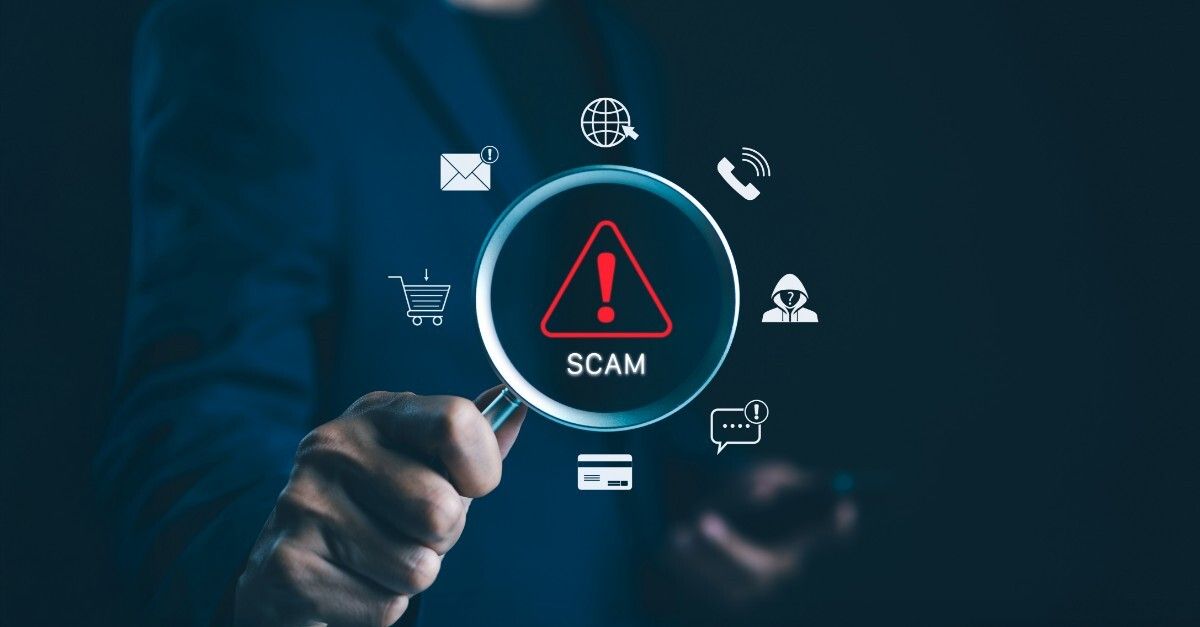
Nearly $1.8 billion in losses due to scams were reported last year, due to the fact that only about one-third of victims report this to anyone. It is estimated that this figure is actually in excess of $2 million.

So this begs the question, what should you do if you have been scammed?

You will want to act as quickly as possible to avoid losing any more money. If you have been scammed:

  1. Don’t send any more money. Block all contact from the scammer.
  2. Contact your bank or financial institution immediately to report the scam. Ask them to stop any transactions.
  3. Warn your family and friends about the scam, so they can watch out for potential follow-up scams.

If you’ve paid a scammer in any of these ways, here’s what to do:

  • Credit/debit card – Contact your bank or card provider immediately to report the scam. Ask them to stop any transactions.
  • Gift card – Report it to the company that issued the card.
  • Wire transfer – Report it to the wire transfer company or bank that you used.
  • Money transfer app – Report it to the app provider (the seller or developer, not the app store).
  • Crypto – Report it to the platform or company you used to send the money. Cryptocurrency may not be recoverable.
  • Cash – If you sent by mail or delivery service, contact Australia Post or the delivery service used to see if they can intercept the package.
  • Unauthorised transfer – If a scammer has transferred money without your approval, report it to your bank straight away. Ask them to freeze your accounts and transactions.

If a scammer has your personal information

For example, if your personal details (like name, phone, email, address, and identity documents) have been leaked in a data breach. Here’s what to do:

  • Report the data breach to your financial institutions – Let your bank, super fund, and any other financial services know.
  • Contact IDCARE – Call 1800 595 160 (Monday to Friday, 8 am–5 pm). They can help you make a plan (for free) to limit the damage.
  • Create a new, stronger password – Make sure you haven’t used it before. If you’ve used the leaked password anywhere else, update it there too.
  • Watch out for suspicious contact – Look for suspicious emails, phone calls, texts or messages through social media. Block or don’t answer anyone you don’t know. Don’t click on any links.
  • Monitor your bank account – Keep a close watch on your bank account for any unauthorised transactions.
  • Monitor your credit report – Request a  temporary ban  on your credit report to ensure no unauthorised loans or credit applications can be made.

If a scammer has accessed your computer or phone 

For example, a scammer pretends to be from your internet or phone provider. They say you have a technical problem and ask for access to your device. Then they infect it with a virus, to steal your passwords and financial information. Here’s what to do:

  • If they accessed your computer – Update your security software and run a scan for viruses. Delete anything identified as a problem and reset your passwords.
  • If they accessed your phone or phone account – Report it to your phone provider. Update your security software and run a scan for viruses. Change your passwords or pins, block scam calls, and consider changing your phone number.

You could also get an IT professional to check your devices in person.

Additional information/assistance can be found at:

www.moneysmart.gov.au – What to do if you have been scammed, how to report scams & get support

idcare.ord – Helps individuals affected by identity theft and cybercrime

Scamwatch.gov.au – Information for consumers and small businesses about how to recognise, avoid and report scams. 

More GTP Articles

By Jessie Lakin December 15, 2025
Over recent years, the Victorian Government has continued to tighten and evolve its approach to property taxation. What began in 2018 with the introduction of the Vacant Residential Land Tax (VRLT) in metropolitan Melbourne has now expanded across regional Victoria, meaning more property owners are captured by these rules than ever before. Many are surprised to learn that VRLT and standard Land Tax are not the same. VRLT applies where a residential property sits unused as a home and is calculated on the capital improved value (including buildings and improvements). Traditional Land Tax, however, is based solely on the land value, essentially the value of the land in its undeveloped state. As of recent months, the Victorian Government has announced further changes to the Vacant Residential Land Tax, coming into effect from 1 January 2026. These reforms will impact owners of undeveloped land held long-term across metropolitan Melbourne. What’s Changing? Prior to 1 January 2026, VRLT does not apply to land without a home on it (sometimes called undeveloped land), commercial residential premises, residential care facilities, supported residential services, retirement villages or land in alpine resorts. From 1 January 2026, VRLT is extending to undeveloped land in metropolitan Melbourne. Where does the new VRLT apply? VRLT is expanding to include land in metropolitan Melbourne that has remained undeveloped for a continuous period of 5 years or more and is capable of residential development. This includes: land without a home on it land with a residence that was partially built but abandoned land with a residential unit, such as a unit, apartment or flat, that has a partially completed fit out but has not been occupied. Metropolitan Melbourne is made up of the Banyule, Bayside, Boroondara, Brimbank, Cardinia, Casey, Greater Dandenong, Darebin, Frankston, Glen Eira, Hobsons Bay, Hume, Kingston, Knox, Manningham, Maribyrnong, Maroondah, Melbourne, Melton, Merri-bek, Monash, Moonee Valley, Mornington Peninsula, Nillumbik, Port Phillip, Stonnington, Whitehorse, Whittlesea, Wyndham, Yarra and Yarra Ranges council areas. Timeframe Rules: The land must be vacant for a continuous period of 5 years or more to attract VRLT. This means for this type of land to become liable to VRLT in 2026, it must have been undeveloped and capable of residential development since midnight on 31 December 2020. If the land is sold, the new owner(s) has a further 5 years to begin construction before VRLT applies. This 5-year period provides adequate time for an owner of residential land to begin construction of a residence before it is regarded as vacant residential land. Exemptions may be available for: · Land being used for commercial or industrial purposes · Land intended for non-residential development with acceptable reasons for delay · Land incapable of residential development due to environmental conditions, land shape, size or natural features Undeveloped residential land that is contiguous with (adjoins) a principal place of residence. Common examples of contiguous land are a garden, swimming pool or tennis court. Crystal ball time: It will be interesting to see if the government extends this new VRLT out to regional Victoria as did the initial VRLT. What will this mean for people that are holding land parcels undeveloped long term? In the meantime, from a tax perspective, remember that if you incur VRLT or standard Land Tax, be sure to keep thorough records, as these costs will form part of your property’s cost base! 
December 15, 2025
Businesses thrive when there’s a commitment to efficiency and productivity. Enlightened leaders acknowledge this and take positive steps to reduce costs, improve customer satisfaction, and develop a competitive edge. Here are 4 practical strategies applicable in most businesses which boost efficiency, productivity, profitability, and growth. 1. Leverage Automation There should be a constant drive towards automation, which transforms routine tasks, like payments, invoicing, and some aspects of customer service. Seamless, low-touch processes free up valuable time for use in more strategic initiatives. Take the small online retailer, for example, which automated inventory management. They deployed software which reduces errors but also saves around 20 hours per week of administrative work. Fulfillment speed has improved so the company can process orders faster, increasing customer satisfaction. 2. Adopt Lean Principles Adopting lean principles means minimising waste and maximising value through continuous improvement across all business functions. It is often associated with manufacturers and their production processes but ANY business can benefit from actively reducing costs, minimising waste, and improving processes, especially those which give the customer a better experience. 3. Invest in Employee Training Skilled employees are more productive and can effectively adapt to new technologies and processes. Training is a long-term investment in the team's capabilities and morale, but there can be short-term gains in, for example, project efficiency, accuracy, completion rates, and Client satisfaction. 4. Use Continuous Feedback Loops Regular feedback from employees and customers provides valuable insights for improvement. This should not be a one-time event but a recurring activity. For example, businesses with periodic staff and customer feedback sessions can promptly address customer concerns while increasing employee engagement, as the team feels more involved and valued. What difference could these strategies make in your business?
By Vicky McClure December 10, 2025
From 1 December 2025 , new Psychological Health and Safety Regulations came into effect. These changes are designed to help workplaces better understand, manage, and prevent psychosocial risks—and ultimately create safer, healthier environments for everyone. The big message behind these updates is simple: mental health matters just as much as physical safety . When people feel supported, respected, and able to manage their workload, the whole workplace benefits. What’s Changing? The new regulations ask employers to take a more proactive approach to psychological wellbeing by: Identifying psychosocial hazards in the workplace Assessing and controlling the risks linked to those hazards Putting systems, policies, and training in place to support mental wellbeing Regularly reviewing those measures to make sure they're working Psychosocial hazards can include things like high or unrealistic workloads, low job control, poor communication, workplace conflict, or exposure to traumatic events. The goal is to address these risks early—before they impact people’s health.  Want to Learn More? WorkSafe has a range of clear, practical resources to help businesses understand the new requirements and get started with compliance. You can find guides, tools, and helpful examples on the WorkSafe Victoria website .
By Holly Nuske December 2, 2025
It is important that you provide your Accountant details regarding share purchases and disposals, as they contain relevant information required to calculate the cost base of your shares and the resulting capital gains tax when they are sold. Your accountant may also request your SRN or HIN number for their records, and any dividends or DRPs received through the year to assist with preparation of your income tax return. Obtaining Shares You can obtain shares in several ways, most commonly by buying them. You should keep a record of your share transactions so you can claim everything you’re entitled to and have your tax worked out accurately. You can obtain shares through: - Buying shares (either directly or through a stockbroker), - Inherited shares, - Dividend reinvestment plans (DRPs), - Mergers and takeovers of companies in which you hold shares, - Share purchase plans - And more. Inherited shares You may inherit shares as part of a deceased estate. In this case: - You treat inherited shares in the same way as any other CGT asset - Where the deceased acquired the shares before 20 September 1985, the market value is used on the day the deceased passed, not the market value on the day shares were received. Owning Shares When you own shares, there are tax implications from: - Receiving dividends, - Participating in DRPs, - Receiving franking credits, - And more. Dividends & DRPs You need to declare all your dividend income in your tax return, even if you use your dividend to purchase more shares (through a DRP). Most dividends are paid in the form of money, either by direct deposit or cheque. However, the company may give you the option of reinvesting your dividends in the form of new shares in the company. This is called a dividend reinvestment plan or scheme. If you take this option, you still pay tax on your reinvested dividends. The amount of the dividend received will also form part of the cost base for the shares you own in that company. Keeping record of your reinvested dividends is important to assist in calculating the capital gains or capital losses you may make when you dispose of the shares. Shares held in joint names If you hold shares in joint names, such as with your spouse, it is assumed that ownership of the shares is divided equally. You can own shares in unequal proportions, but you must be able to demonstrate this. For example. You can keep a record of the amount each party contributes to the acquisition cost. Dividend income and franking credits would be assessed in the same proportion as the shares are owned. Disposing of Shares You can dispose of shares in the following ways: - Selling them - Gifting them - Transferring them - Through share buy-backs - Through mergers, takeovers, and demergers - When the company goes into liquidation It is important to keep record of these events. Capital gains and losses when disposing of shares You must report the capital gain or loss in your tax return. You make a capital gain when your capital proceeds from disposing of the shares are greater than the cost base of your shares. You may be able to reduce your capital gain if you have held these shares for greater than 12 months. You make a capital loss if the capital proceeds are less than the cost base of your shares. For additional information see the link below: https://iorder.com.au/publication/Download.aspx?ProdID=75444-04.2025  Please communicate your share transactions to your Accountant for their records and to assist you with complying with tax obligations.
By Breanna Bell November 26, 2025
Fringe Benefits Tax (FBT) is a special tax separate from GST and income tax that businesses in Australia must pay when providing a fringe benefit to employees and other associates. What is a Fringe Benefit? A fringe benefit is a reimbursement, expense or non-cash payment provided by a business that is not salary and wages. Common examples include: · Personal use by an employee or associate of a business/company car · Paying or reimbursing personal expenses such as school fees, memberships, or insurance · Providing entertainment, such as meals at restaurants or tickets to events If it is a personal expense or private use of a business asset, and the business pays for it — it may be a fringe benefit. Who Can Trigger FBT ? FBT applies when fringe benefits are provided to: · Employees · Company directors · Family members of employees or directors · Beneficiaries of a trust who work in or help run the business For example, if a director uses a company car for private purposes, FBT applies — even if the director is not taking wages or making cash drawings. If your business is a company or trust, the business is a separate legal entity from you. This means that the owners’ use of assets is treated as if they’re an employee. Important Exception This rule does not apply to sole traders and partners of a partnership using business assets. However, sole traders and partnerships are still caught by FBT rules if providing benefits to employees. What You Need to Do Each FBT Year? If you think you may be providing a fringe benefit to an employee, director, family member or other associate: 1. Keep records of any benefits, reimbursements or private use of business assets. 2. Complete the annual FBT questionnaire provided by Green Taylor Partners. 3. Provide all relevant details so we can help you determine whether FBT applies and how to meet your obligations. 
More Posts